
Wednesday, August 29, 2012


Wednesday, July 18, 2012
Analysis and Criticality
Analysis
Based on my research / survey / observation :
Criticality
Based on my analysis, i have point out few major of question that might be help for my research:
Based on my research / survey / observation :
- Respondent believe we can do urban agriculture in urban area.
- Respondent agree that we can do urban agriculture as a hobby but they don't want to do it as their hobby.
- Lot of benefit to our self and community.
- Agriculture can be boring and tiring but also feel satisfaction and exciting.
- Lot of unused thing can be reused for this urban agriculture (ex: bottle, broken cup, etc.)
Criticality
Based on my analysis, i have point out few major of question that might be help for my research:
- What can we make urban agriculture more interesting?
- Do they aware the benefit of urban agriculture to their life?
- What can we get from urban agriculture?
- What material that we can use as a base to do urban agriculture?
- Will it be worth doing urban agriculture?
Research Materials
Community food-growing
and urban agriculture projects help well-being in the following ways:
- The work itself is therapeutic for participants, because it involves hands-on and useful achievements that reduce stress levels and support their mental health.
- · The urban agriculture setting is advantageous in offering people a routine that is easy to understand and engage with. Working with plants or animals allows participants to have space and tasks to themselves, with their routine guided by the care needs of the plants or animals. The process of caring for something encourages satisfaction and self-esteem.
- · Simply working physically, outdoors and in a natural environment, contributes to mental well-being for participants.
- · Communities developed through food-growing and urban agriculture projects help participants to feel part of something with other people. Supportive relationships relieve stress and improve self-esteem.
Community
food growing and urban agriculture projects have particular strengths in this
respect. They were seen to develop the following transferable skills:
- · Self-management and personal responsibility
Learning
to behave appropriately and to meet expectations in the work that is done.
- · Problem solving
The
ability to understand practical problems or interpersonal problems and to
address them.
- · Teamwork and communication skills
The
ability to work well in a team, to support others, or to lead others.
These is few example of simple urban agriculture:


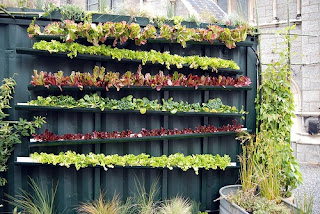

These is few example of simple urban agriculture:


Methodology
For this research i did online survey on few people based on these questionnaire:
Do
you know, we can use waste such as bottle, tire, and eggshell to plant the
vegetables?or other interesting way to do urban agriculture?Give example. *
Conclusion:
Gender *
Female
Male
Age *
17 or younger
18 - 25
25 - 30
31- 40
41 or older
Occupation *
Unemployed
Student
Private sector worker
Government sector
worker
Other
Do
you know what urban agriculture is? *
Yes
No
Not sure
Do
you think we can do agriculture in city/urban agriculture? *
Yes
No
If
you live in city area and you like to do agriculture, would you take the
opportunity to do the urban agriculture? *
Yes
No
Do
you think urban agriculture can be done as a hobby? *
Yes
No
Would
you like to do urban agriculture as your hobby during your free time? *
Yes
No
If
you do urban agriculture, would you like to... *
sell the product to a
market
keep it as your daily
food
decoration in your
house
Other:
Do you think urban
agriculture will generate profit in your life? State the reason. *
In
your opinion, do you think Malaysia experiences insufficient of fresh food
productions? *
Yes
No
For
example, Malaysia has problems with shortage of food productions, (fruits,
vegetables, etc.) do you think urban agriculture will solve the problem? *
Yes
No
Other:
As
we all know, Malaysia slowly became an urban city and a lot of ecology problem
(air pollution, water pollution and etc); do you think urban agriculture will
help.... *
reduce the problem
make the problem
worse
Other:
Conclusion:
Based on the survey that i conducted, more than half of respondent not know what is urban agriculture. Even so, they believe they can do agriculture in urban city. Even though they don't really know about urban agriculture, some of the respondent would like to do it as their activities during free time. They also think these activities would bring them some profit. Some of them, would like to do these activities as a hobby and do urban agriculture to decorating their house and use it for their self. They also give some ideas how to do urban agriculture in creative ways.
Monday, June 25, 2012
Homelessness
Homelessness describes the condition of people
without a regular dwelling.
People who are homeless are most often unable to acquire and maintain regular,
safe, and adequate housing, or lack "fixed, regular, and adequate
night-time residence. The legal definition of
"homeless" varies from country to country, or among different
entities or institutions in the same country or region.
The term homeless may also include people whose primary night-time residence
is in a homeless shelter, a warming center, a domestic violence shelter, cardboard boxes or other ad hoc housing situation. American Government homeless
enumeration studies also include persons who sleep in a public or private
place not designed for use as a regular sleeping accommodation for human beings.
Homelessness, defined narrowly and strictly: not having a shelter in
which to sleep and to perform basic human activities such as bathing.
Definition of homelessness:
1. Not having a place to call ‘home,’ and thus being forced to sleep
outside or in a temporary shelter,
2. Having access to housing that is seriously deficient, in terms of
sanitation, safe water, security of tenure, affordability, personal safety,
and/or accessibility to employment, education, and health care.
Why People Become
Homeless
There are a range of factors which can lead
to a person becoming homeless which can be divided into the following -
Structural Causes can include poverty, unemployment
and a lack of quality, affordable and appropriate housing.
Institutional Causes can include people who have been
living in foster care and young people in state care, those who have been in
prison or in mental health institutions, people who have been in hospital on a
long-term basis or those who have been in the armed forces.
Relationship Causes can include people involved in
abusive relationships or family breakdown. It can also be due to a death in the
family.
Personal Causes can include people with mental health
issues, learning difficulties and problems with drug and alcohol use.
Effects of Homelessness
For many people being homeless can mean time spent sleeping
rough, living in hostels and/or moving between different types of
accommodation. It can mean not having a normal family life or social contacts
and a lack of belonging.
Long-term homelessness can impact on a person’s self-esteem
– how they feel about themselves, and it can mean that that person does not get
the opportunity to do well in education or employment. Imagine trying to start
a new job or to go to school if you are living in emergency accommodation, not
knowing where you will sleep that night. Imagine not being allowed into a café
for a cup of tea and a sandwich as you had spent a few nights sleeping rough.
Imagine having nowhere private to wash and shave each day.
Reference:
http://www.geog.ubc.ca/~ewyly/g350/homeless.pdf
http://www.simon.ie/uploads/File/Close%20to%20Home%20%20Homelessness%20Causes%20and%20Effects.pdf
Subscribe to:
Posts (Atom)